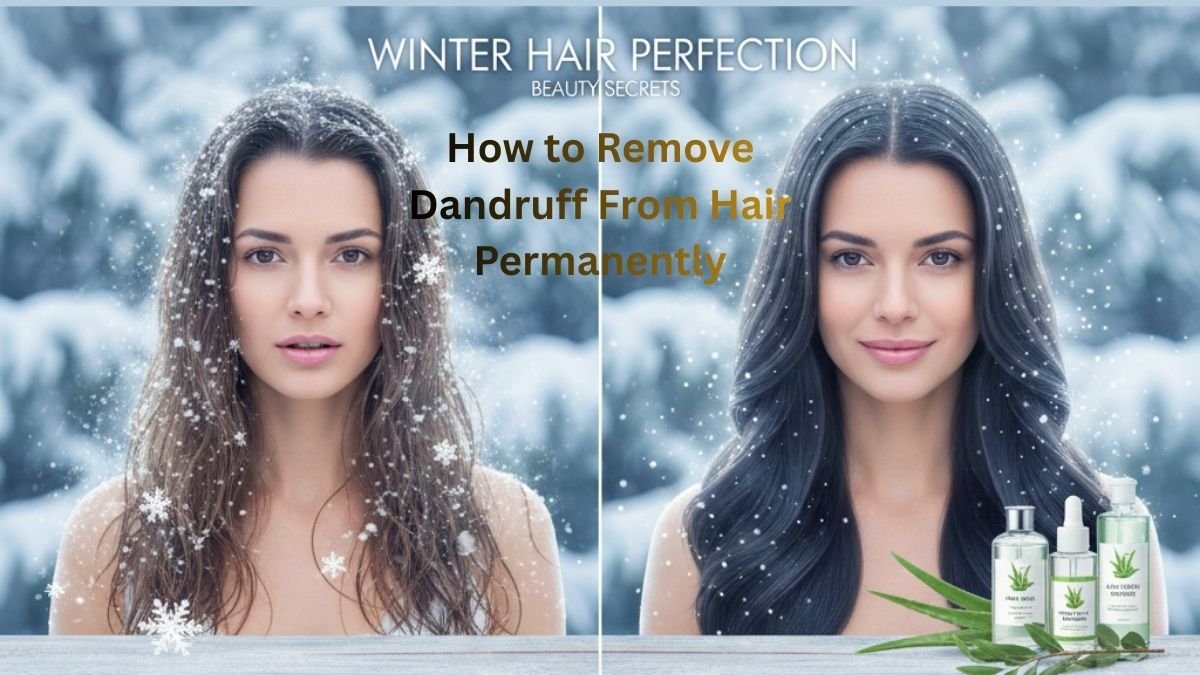
How to Remove Dandruff From Hair Permanently in the Winter Season- Dandruff becomes a common problem in winter, but for many people it becomes severe, embarrassing, and difficult to control. The cold air outside and the warm, dry air inside your home create a perfect combination for dry scalp, itchiness, flakes, and irritation. The good news is this: dandruff can be controlled permanently if you understand the root causes and take consistent care using the right methods.
In this article, you will learn why dandruff increases in winter, what mistakes people make, and how to remove dandruff permanently using real, practical, scientifically supported steps.
Why Dandruff Gets Worse in Winter
Winter dandruff is not just “white flakes.” It is a combination of multiple issues:
1. Dry Scalp
Cold air has very low humidity. When it comes in contact with your scalp, it removes natural oils and leaves the skin dry and flaky.
2. Overgrowth of Fungus (Malassezia)
This fungus naturally lives on the scalp, but when the scalp becomes dry or too oily, it grows rapidly. This causes itching, redness, and more flakes.
3. Hot Water Showers
People love taking hot showers in winter, but hot water strips your scalp’s natural moisture, making dandruff worse.
4. Infrequent Hair Washing
Due to cold weather, many people wash their hair less frequently. This leads to sweat, oil, and dirt build-up, which triggers dandruff.
5. Weak Scalp Barrier
Cold air weakens the scalp’s natural protective layer, making it sensitive and prone to inflammation.
Understanding these causes helps you treat dandruff more effectively.
Signs You Have Winter Dandruff
If you see these signs, your dandruff is winter-triggered:
- White or yellow flakes on hair and shoulders
- Dry and itchy scalp, worse after scratching
- Red patches or small bumps on scalp
- Hair feeling rough, dull, or weak
- Flakes increasing after hot showers
- Itching worsens in dry indoor rooms
Step-by-Step Guide
Here are the best scientifically effective and natural ways to remove dandruff permanently. Follow these continuously for at least 3–4 weeks to see long-term results.
1. Wash Your Hair With an Anti-Dandruff Shampoo (2–3 Times a Week)
To remove dandruff permanently, you need a shampoo containing active ingredients like:
- Ketoconazole (1% or 2%) – Best for fungal dandruff
- Zinc Pyrithione – Reduces fungus and itch
- Salicylic Acid – Removes flakes and dead skin
- Coal Tar – Slows down skin cell shedding
- Selenium Sulfide – Reduces fungal growth
How to use it correctly:
- Apply the shampoo on scalp only, not on hair length.
- Massage gently for 2–3 minutes.
- Rinse with slightly warm water (never hot).
- Do not use anti-dandruff shampoo daily unless instructed.
Consistent use gives permanent improvement.
2. Use Natural Oils to Moisturize the Scalp
Dry scalp is the main reason for winter dandruff. Oiling helps restore moisture.
Best oils for dandruff in winter:
- Coconut oil – Strong anti-fungal properties
- Tea tree oil (few drops mixed with another oil) – Powerful dandruff fighter
- Olive oil – Deeply hydrates
- Castor oil – Thick and nourishing
How to apply:
Warm the oil slightly and massage gently onto the scalp. Leave it for 30–45 minutes and wash with mild shampoo.
Repeat 2 times a week.
Tip: Never leave heavy oils overnight if your scalp is oily.
3. Avoid Hot Water — Use Lukewarm Water Only
Hot water removes scalp moisture instantly. This causes even more itchiness and flakes.
Switch to lukewarm water for washing hair. This single change can reduce dandruff by 30–40% in winter.
4. Maintain a Healthy Hair-Washing Routine
In winter, many people wash hair once a week or even less. This traps sweat, dirt, and oil, causing more dandruff.
Best routine:
- Oily scalp: Wash every 2 days
- Normal scalp: Wash every 3 days
- Dry scalp: Wash every 3–4 days with a hydrating shampoo
Never go more than 4 days without washing hair.
5. Use a Gentle, Moisturizing Conditioner
Winter dryness weakens your scalp barrier. A conditioner helps hydrate and protect the scalp.
Apply conditioner only on hair length, not on the scalp.
For dry winter hair, choose:
- Coconut milk conditioner
- Argan oil conditioner
- Shea butter conditioner
You can also use leave-in conditioners for extra moisture.
6. Try These Effective Home Remedies for Winter Dandruff
Home remedies work best when used once or twice a week along with a good shampoo.
A. Aloe Vera Gel
- Anti-inflammatory
- Soothes scalp
- Reduces fungal growth
Apply pure aloe gel for 20–25 minutes before shampoo.
B. Lemon Juice (Diluted)
Lemon balances scalp pH and kills fungus.
Mix with water and apply on scalp for 5 minutes, then rinse.
Do not use on sensitive or wounded scalp.
C. Apple Cider Vinegar (ACV) Rinse
ACV reduces fungus and restores scalp pH.
Mix:
- 2 tablespoons ACV
- 1 cup water
Pour on scalp after shampoo. Leave 2 minutes and rinse.
D. Curd (Yogurt) Mask
Curd fights dandruff naturally and makes scalp soft.
Mix 1 cup curd + 1 tablespoon olive oil.
Apply for 25 minutes and wash.
Avoid if you have sinus problems in winter.
7. Improve Your Diet for Long-Term Dandruff Control
Your scalp health is directly connected to your diet.
Include:
- Omega-3 foods (walnuts, flaxseeds, fish)
- Vitamin B (eggs, bananas, milk)
- Zinc-rich foods (chickpeas, pumpkin seeds)
- Vitamin D (sunlight, fortified foods)
- Water-rich foods (fruits, soups, vegetables)
Avoid:
- Junk food
- Too much sugar
- Excess dairy
- Packaged snacks
- Deep-fried foods
When your diet is clean, your scalp naturally becomes healthy.
8. Use a Humidifier Indoors
Winter indoor heating makes your room extremely dry, which dries the scalp even more.
A small humidifier in your bedroom keeps the air moist and prevents scalp dryness.
If you don’t have a humidifier, keep a bowl of warm water in the room—it works surprisingly well.
9. Avoid Scratching the Scalp
Scratching damages the skin, causes redness, and increases flaking. Use soothing gels or anti-itch sprays instead of scratching.
10. Reduce Stress
Stress increases oil production and triggers dandruff.
You don’t need heavy workouts — simply try:
- 10 minutes of deep breathing
- Yoga
- A relaxing walk
- Good sleep
A calm mind leads to a healthy scalp.
11. When to See a Dermatologist?
If dandruff continues even after 4–6 weeks of proper care, the real problem might be:
- Psoriasis
- Seborrheic dermatitis
- Eczema
- Fungal infection
- Allergy to hair products
A dermatologist can evaluate and give medicated lotions or stronger treatments.
Final Thoughts
Removing dandruff permanently in winter is possible if you follow a consistent scalp-care routine. The most important steps are:
- Use an anti-dandruff shampoo regularly
- Keep scalp moisturized
- Avoid hot water
- Maintain a proper washing routine
- Eat a healthy diet
- Use natural remedies as support
By combining these steps and staying consistent for a few weeks, you can achieve a clean, healthy, dandruff-free scalp — not only in winter but throughout the year.
Click here- Home Remedy for Cold and Sore Throat: Natural Ways That Actually Work